Controller compatibility
Which PLC models, firmware versions and addressing modes are in use? Is direct controller access needed, or does the architecture use OPC UA?
Middleware evaluation
If you are replacing an existing PLC-to-database interface, the key question is not just whether data moves. It is how well the replacement handles your production sequence when something goes wrong.
Review the actual workflow, not just the feature list.
Which PLC models, firmware versions and addressing modes are in use? Is direct controller access needed, or does the architecture use OPC UA?
Can the PLC read a meaningful completion result? What happens when the database succeeds but the return write fails?
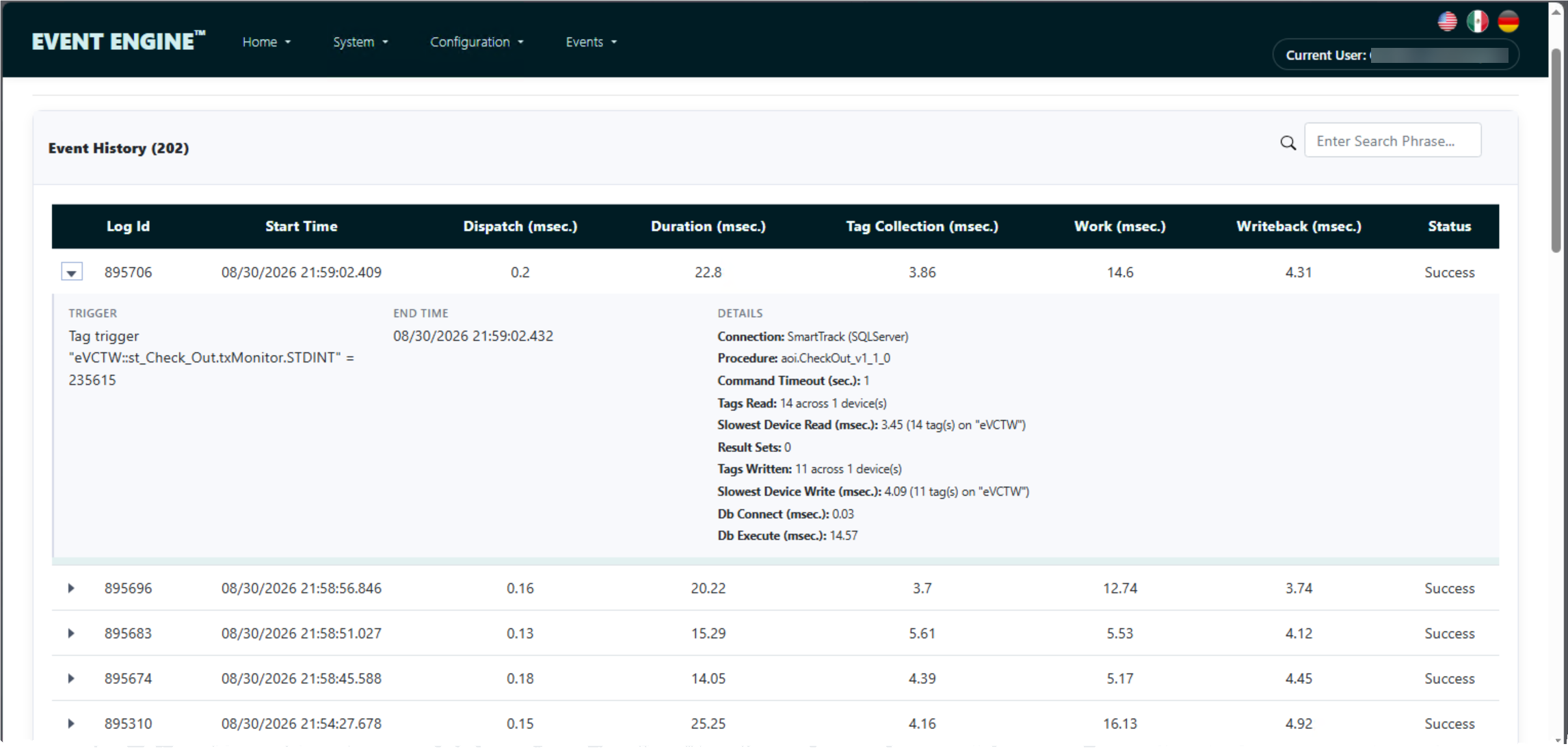
Can maintenance distinguish controller collection time from database execution and write-back? What evidence is retained after a fault?
Event Engine® offers configurable events with collected inputs, database operations and PLC result tags. Individual event runs can be examined by phase, including separate collection, work and write-back timing.
Rockwell Logix structure imports can reduce repetitive mapping. Event Health reviews recorded behavior and can flag unusual patterns; it does not guarantee that every fault will be predicted.
There are important boundaries. Event Engine® does not automatically recreate an existing FactoryTalk Transaction Manager configuration. An engineer must review each operation, stored procedure, handshake, retry policy and unsupported interface before migration.
Rockwell describes FactoryTalk Transaction Manager as supporting two-way control-system/database exchanges and transaction caching. Review the features and recovery settings of your installed version before planning a replacement.
Bring the controller, product or quality requirement you need to evaluate. We can review the workflow, interfaces and limits.