Your process first
Every plant process is different. We start there.
Your line was not built from a template, and its data will not fit one either. The controllers, the recipe, the way product moves between stations, the question engineering keeps asking — that combination exists in exactly one place. So the first conversation is about your process, not about a product.
Factory Data Systems has spent twenty years on plant-floor data problems that had never been solved before because nobody had that process before: getting values out of the controllers you actually run, tying them to the product and the operation the way your line actually works, holding the line when a value is wrong, and putting the record in front of the people who need it. The harder the application, the more that experience matters.
A traceability gap. A middleware that falls behind under your load. A recipe nobody trusts. A database that has the data but not the answers. A question engineering keeps asking and the shift report can't answer.
A direct answer about how we would solve it for your process, what it would take, and what it would look like running on your equipment — before anyone talks about buying anything.
What the same problems produced
Two products, built from the problems that kept coming back.
Move it reliably; then make it mean something. Each stands alone, each is configured to your process rather than the other way around, and when neither fits we build what does — on the same principles, on your servers.
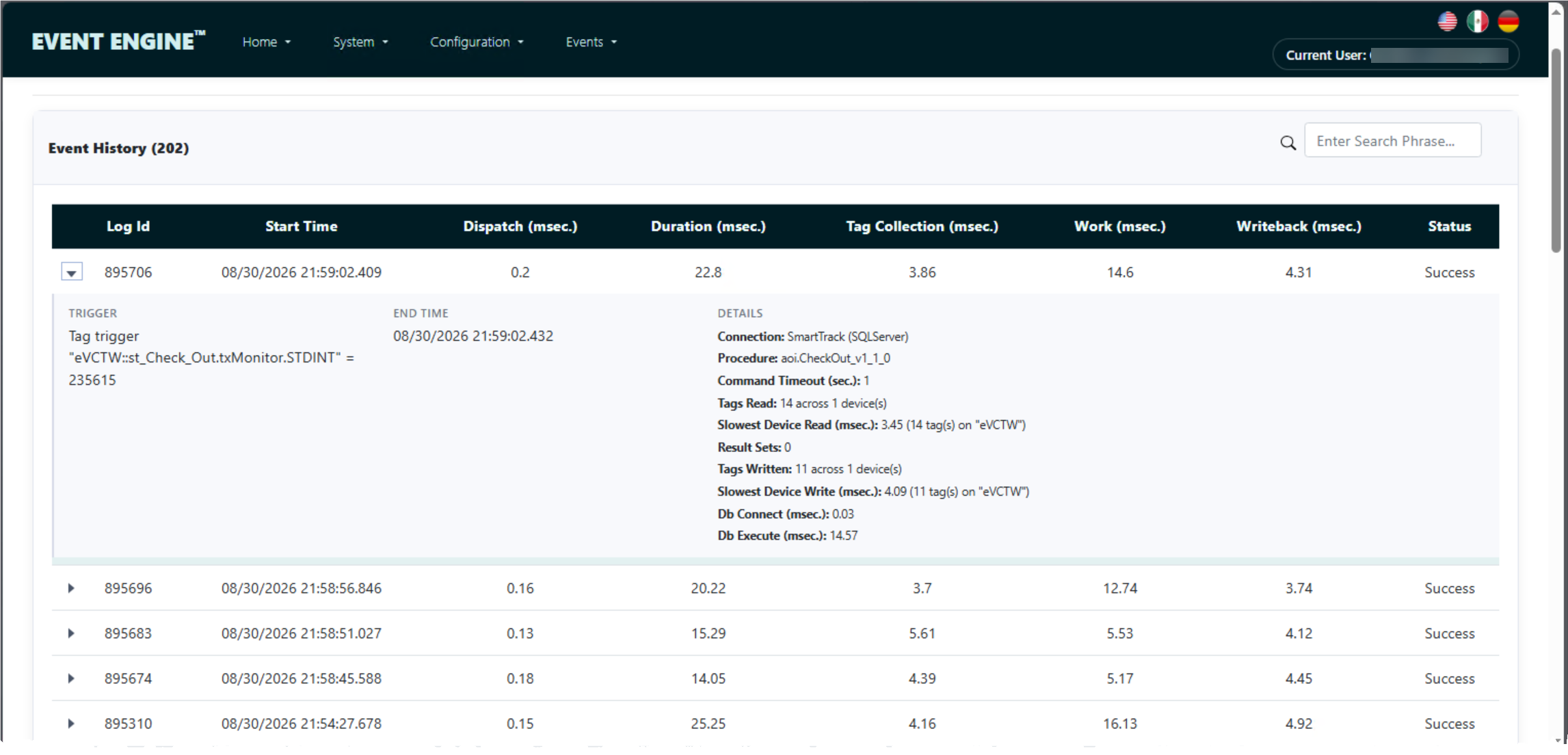
Event Engine®®
Native drivers straight from your controllers to your databases. Configured in a browser, acknowledged back to the PLC, and watched by its own health monitor.
- Direct Rockwell Logix, Siemens S7, and Modbus TCP/IP — OPC UA for everything else
- Whole PLC structures imported at once, not tag by tag
- Every event returns completed or failed to the controller, with status and timestamp
- Result sets written back into a matching PLC data structure
- Event Health learns each event's normal and warns before a slow transaction becomes a stopped line
IntelliTrack™™
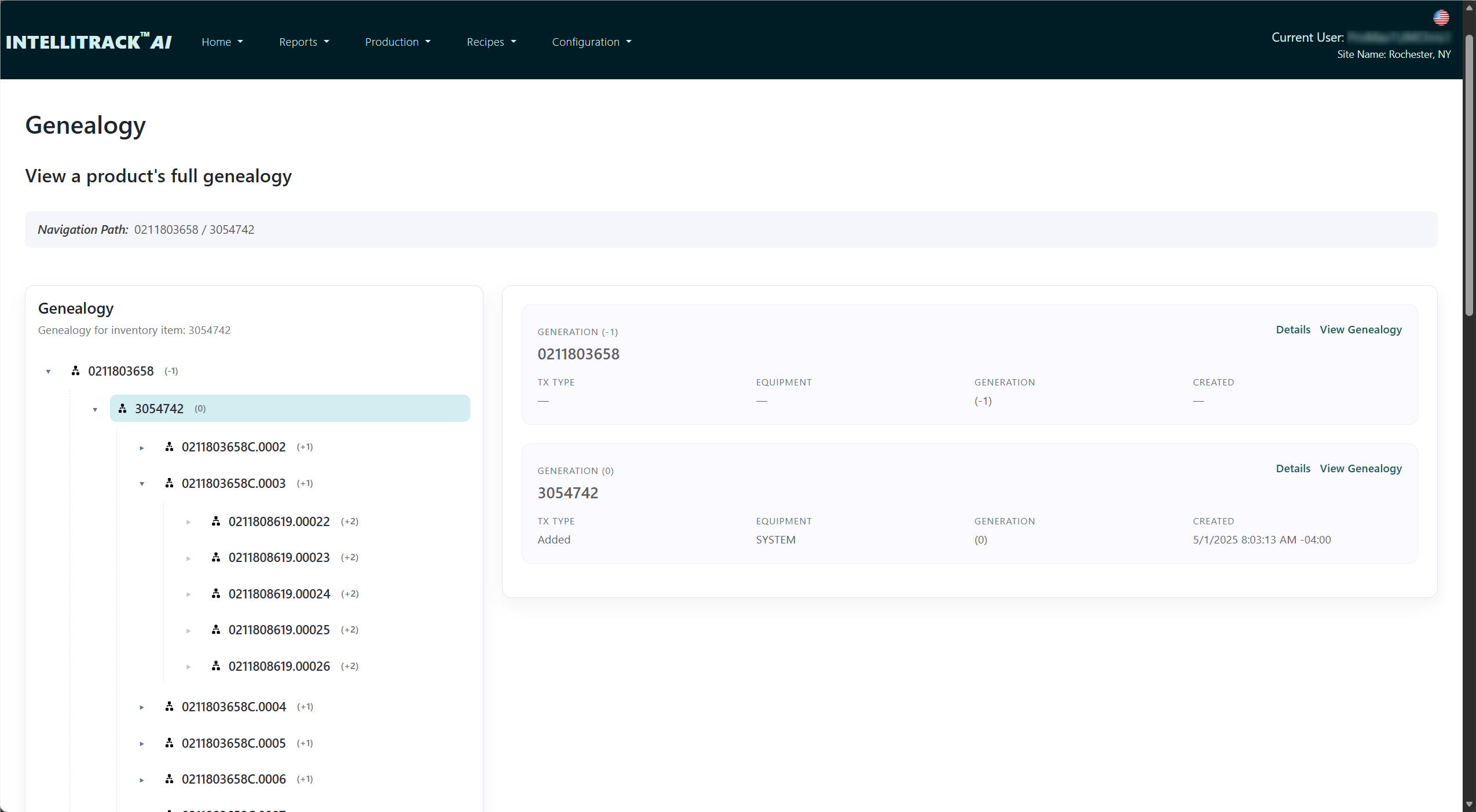
A structured, attribute-level record of every unit at every operation — enforced while production runs, and queryable by people and by AI afterward.
- Hundreds of named values per unit, per operation, tied to recipe, lot, equipment, and outcome
- Recipe limits, BOM rules, quality gates, and shipping verification enforced in-process
- Genealogy built as a byproduct, forward and backward, current as production happens
- Live WIP, work orders, OEE, and downtime — current state, not an end-of-shift report
- AI Insights answers questions against your own production record, with governed credentials
What actionable data looks like
AI, on your record
AI is only as good as the record underneath it.
Most plants cannot put AI to work on production data because the data was never captured in a form a model can trust — time-series traces, log files, and spreadsheets assembled after the fact.
IntelliTrack™ captures every measurement, process value, operator entry, and equipment state as a named attribute tied to a specific unit at a specific operation. That is what lets AI Insights answer a question like "which lots share the conditions of this defect?" against your own record — through governed credentials, with nothing model-authored touching production.
Event Engine® keeps the feed complete and acknowledged, so the record the AI reasons over has no gaps and no assumptions in it.
Structured first. Then intelligent.
What the model is given, and what it is not
A general-purpose model knows nothing about your plant. IntelliTrack™ closes that gap deliberately — it decides what the model sees, remembers what it has learned about your operation, and keeps a record of every exchange.
- The record
- IntelliTrack™ selects the data for each question — the units, operations, recipe values, and outcomes involved — and hands it to the model as a structured payload. The model never touches production, never writes a query, and never sees more than the question needs.
- The context
- Instruction templates carry how your plant names things, what its rules are, and how answers should be presented. Each user's own preferences ride along, so an engineer and a supervisor get answers shaped for them.
- The memory
- Business rules, decisions, and preferences the AI learns are kept as reviewable memory items — each with an importance, a confidence, an approval status, and an expiry. Memory is shared across providers, superseded rather than overwritten, and periodically compacted so it stays sharp.
- The governance
- Provider credentials are provisioned and held by the system, not by users. Every request, the data it carried, and every memory change are logged and auditable. Switch providers without losing what the system has learned.
That is why the answers hold up: the model reasons over a record IntelliTrack™ vouches for, inside a context your plant defined, with a memory your people approved.
Proof
An hour of lost production a day, recovered
An automotive components manufacturer averaged five events per second — but the process swung between none and thirty-five concurrent.
The peaks were enough to fault events with no assignable cause: dropped records, scrapped parts, missed cycles, and an hour of lost production every day. Months of troubleshooting found nothing, because nothing had recorded anything to find. Event Engine® absorbed the bursts, and let them consolidate several middleware instances onto one.
- Before
- Faulted events with no assignable cause; roughly one hour of lost production per day.
- After
- Bursts handled without fault; multiple middleware instances consolidated onto one.
- Load
- 5 events per second average, swinging between 0 and 35 concurrent.
Compatibility
Works with what you already run
- Controllers
- Direct drivers for Rockwell Logix, Siemens S7, and Modbus TCP/IP. Any PLC reachable over OPC UA.
- Databases
- Microsoft SQL Server and Oracle, driven natively.
- Platform
- Windows — on-premises or in the cloud. No vendor cloud service required.
- Interface
- Any browser on the plant network, with per-user access control and Active Directory authentication.
- Licensing
- Perpetual or subscription, with an annual maintenance agreement available.
- Partners
- Systems integrators deploy both products under their own branding, with FDS behind them.
Where to go next